Life Low in Sodium · 4 min read · Updated 2026-11-27
Potassium Chloride Salt Substitutes vs. Salt-Free Herbs: Safety, Taste & Kidney Warnings
At a Glance
Potassium chloride substitutes (NoSalt, Nu-Salt, Morton Salt Substitute) replace sodium with potassium—delivering a real salty taste and proven blood pressure reduction for adults with healthy kidneys, but posing a serious hyperkalemia risk for anyone with kidney disease or on common blood pressure medications.
- 1/4 tsp Pure Potassium Chloride: 0 mg sodium · ~640 mg potassium (2,560 mg K per full tsp)
- 1/4 tsp 50/50 Lite Salt: ~290 mg sodium · ~350 mg potassium (50% sodium cut)
- NEJM SSaSS Trial (20,995 adults): KCl salt substitution cut stroke by 14% and MACE by 13%
Start here:Check your medication list for ACE inhibitors (-pril), ARBs (-sartan), or spironolactone before touching potassium chloride; when in doubt, season with 100% salt-free herbs, garlic, and lemon juice instead.
How potassium chloride salt substitutes work—and why the medical fine print matters
Walk down the spice aisle and you will see two totally different products sitting next to the table salt: potassium chloride salt substitutes (NoSalt, Nu-Salt, Morton Salt Substitute, Morton Lite Salt) and salt-free herb blends (Dash / Mrs. Dash, Penzeys Mural of Flavor). Shoppers frequently grab them interchangeably, assuming anything labeled "Salt Substitute" is harmless.
Chemically and medically, they could not be more different. Compare the exact sodium and potassium load of a 1/4-teaspoon pinch and a full 1-teaspoon measure across all seven kitchen seasoning options on the interactive chart below:
Sodium & Potassium by Spoonful: Salt vs. Kosher vs. MSG vs. Substitutes
Toggle between a 1/4 tsp cooking pinch and a 1 tsp recipe measure. Click any bar to inspect chemical breakdown.
Because glutamate is a much larger molecule than chloride, pure MSG carries roughly one-fifth the sodium of table salt per teaspoon while adding deep savory umami.
The clinical evidence: What the landmark 2021 NEJM SSaSS Trial proved
For adults with normal kidney function who are not taking potassium-retaining drugs, replacing part of dietary sodium chloride with potassium chloride has two simultaneous blood-pressure benefits: it lowers sodium intake while raising dietary potassium (which signals the kidneys to excrete more sodium via the renal sodium-chloride cotransporter, NCC).
In the landmark Salt Substitute and Stroke Study (SSaSS) published in the New England Journal of Medicine (Neal et al., 2021), researchers randomized 20,995 adults (mean age 65.4, with a history of stroke or age ≥60 with high blood pressure) across 600 villages to use either regular salt (100% NaCl) or a potassium-enriched salt substitute (75% NaCl / 25% KCl) for nearly 5 years:
- 14% lower risk of stroke (
p = 0.006) - 13% lower risk of major cardiovascular events (stroke or acute coronary syndrome)
- 12% lower all-cause mortality (
p < 0.001)
Crucially, however, the SSaSS trial excluded patients with serious kidney disease or those taking potassium-sparing diuretics or potassium supplements.
The Kidney & Medication Safety Checklist (Read before buying KCl)
A single quarter-teaspoon of pure potassium chloride delivers ~640 mg of elemental potassium—more potassium than a medium banana (422 mg) or a baked potato. When healthy kidneys sense extra potassium in the bloodstream, they excrete it rapidly in urine. When kidneys are impaired—or when common heart and blood-pressure drugs block the hormone aldosterone—potassium builds up in the blood (hyperkalemia), which can trigger dangerous heart arrhythmias.
| Your Clinical / Medication Profile | Pure Potassium Chloride (NoSalt / Nu-Salt) | 50/50 Lite Salt (NaCl + KCl) | Salt-Free Herbs, Garlic & Citrus (Dash) |
|---|---|---|---|
| Healthy kidneys + No BP medications | Safe in culinary pinches | Safe (cuts Na by 50%) | 100% Safe |
| Taking Thiazide or Loop Diuretics (hydrochlorothiazide, furosemide) | Ask Doctor (often helpful since these drugs deplete K) | Ask Doctor | 100% Safe |
| Taking ACE Inhibitors (lisinopril, enalapril, ramipril) | Caution / Ask Doctor First (retains potassium) | Caution / Ask Doctor | 100% Safe |
| Taking ARBs (losartan, valsartan, irbesartan) | Caution / Ask Doctor First (retains potassium) | Caution / Ask Doctor | 100% Safe |
| Taking Potassium-Sparing Diuretics (spironolactone, eplerenone, triamterene) | DO NOT USE (high hyperkalemia risk) | DO NOT USE | 100% Safe |
| Chronic Kidney Disease (CKD Stage 3b, 4, or 5) or Heart Failure | DO NOT USE without nephrologist order | DO NOT USE | 100% Safe |
How to tame the metallic aftertaste of potassium chloride (and 3 zero-potassium alternatives)
If your physician confirms that potassium chloride is safe for your lab work, three simple culinary rules keep it from tasting metallic:
- Add it at the table, not in the simmering pot: Extended boiling or high-heat roasting accentuates the bitter, metallic tail note of potassium ions. Cook with garlic, onions, and herbs, then add a light pinch of KCl just before serving.
- Pair it with citric acid (lemon or lime juice): Food-science taste panels demonstrate that citric acid and natural glutamates (from tomatoes or mushrooms) mask the bitter receptor activation of KCl.
- Never exceed 1/8 to 1/4 teaspoon per serving: Using more KCl does not make food taste like regular salt; it crosses the bitter threshold.
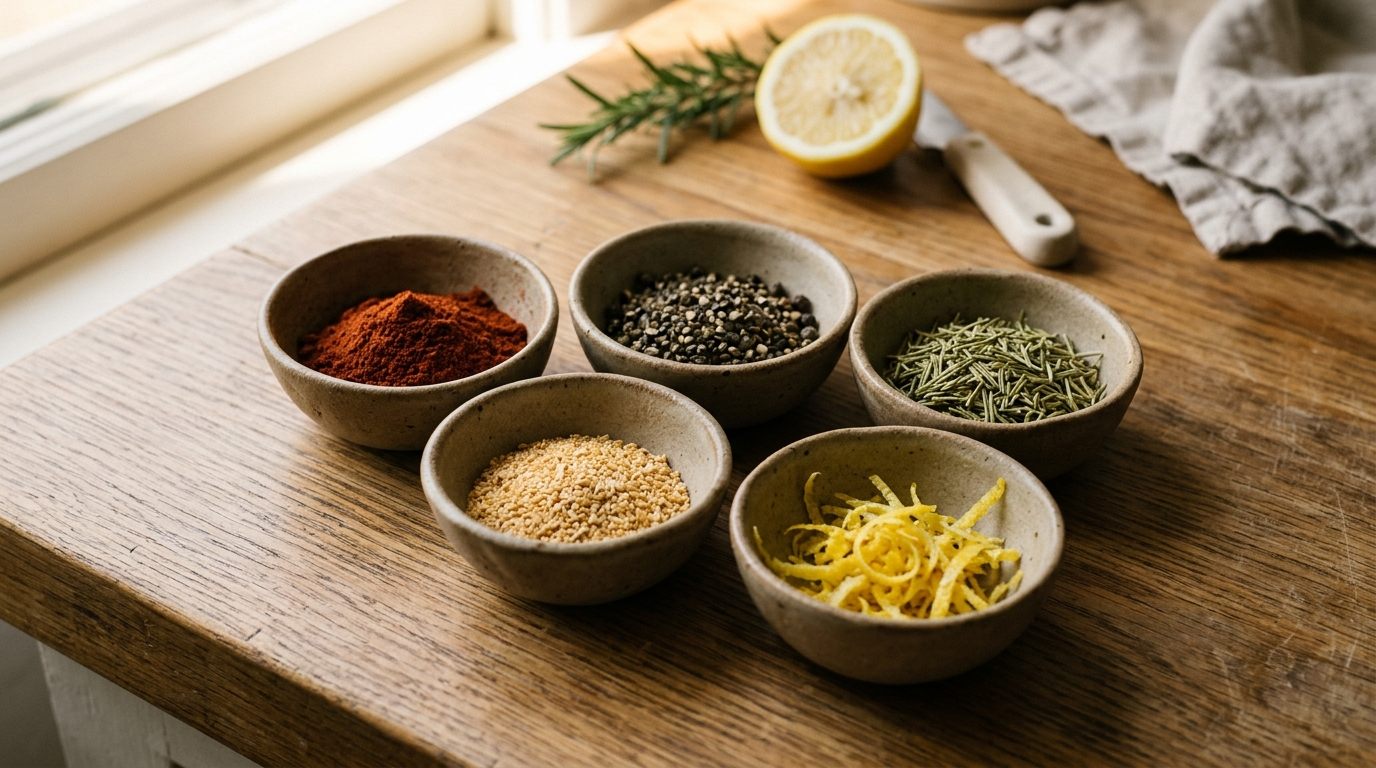
And if you cannot—or prefer not to—use potassium chloride at all, you can build bold zero-sodium flavor using our 3 DIY Salt-Free Seasoning Blends or a tiny measured pinch of Pure MSG (120 mg Na per 1/4 tsp).
References
- Neal B, Wu Y, Feng X, et al. Effect of Salt Substitution on Cardiovascular Events and Death (SSaSS). New England Journal of Medicine. 2021;385(12):1067–1077.
- National Kidney Foundation (NKF). Potassium and Your CKD Diet & Salt Substitutes: What Kidney Patients Need to Know.
- American Heart Association (AHA). Potassium Chloride Salt Substitutes and Blood Pressure Management.
- USDA FoodData Central SR Legacy: Table salt (FDC #173468), garlic powder (FDC #171329), black pepper (FDC #170931).
Common Questions
- Who should NEVER use potassium chloride salt substitutes without a doctor's approval?
- Anyone with chronic kidney disease (CKD), impaired renal function, heart failure, adrenal insufficiency, or anyone taking medications that reduce potassium excretion—including ACE inhibitors (lisinopril, ramipril), ARBs (losartan, valsartan), potassium-sparing diuretics (spironolactone, amiloride, triamterene), or NSAIDs taken chronically.
- Why does pure potassium chloride taste slightly metallic or bitter?
- Potassium ions activate both salty epithelial sodium channels (ENaC) and bitter T2R taste receptors on the back of the tongue, especially when heated above 140°F or used in amounts over 1/4 teaspoon. Pairing KCl with acid (lemon juice or vinegar), garlic, and black pepper—or using a 50/50 Lite Salt blend if medically cleared—masks the bitter tail note.
- Are pink Himalayan salt, Celtic sea salt, or kosher salt lower in sodium than table salt?
- By weight, no—table salt, sea salt, pink Himalayan salt, and kosher salt are all 97% to 99% sodium chloride (~37% to 39% elemental sodium). Flaky kosher salt (like Diamond Crystal) only has less sodium per teaspoon (~1,120 mg vs. 2,300 mg) because its hollow pyramid flakes take up more air space in a spoon.
- What is the safest zero-sodium seasoning for people with both high blood pressure and kidney disease?
- True salt-free culinary herb, spice, and citrus blends—such as garlic powder, onion powder, smoked paprika, black pepper, rosemary, cumin, fresh lemon juice, and apple cider vinegar—contain 0 mg of sodium and negligible potassium (~10–20 mg per spoonful), making them safe for every renal and cardiovascular profile.