Life Low in Sodium · 5 min read · Updated 2026-11-27
How to Make Low-Sodium Food Taste Amazing (Flavor Science + 3 DIY Salt-Free Blends)
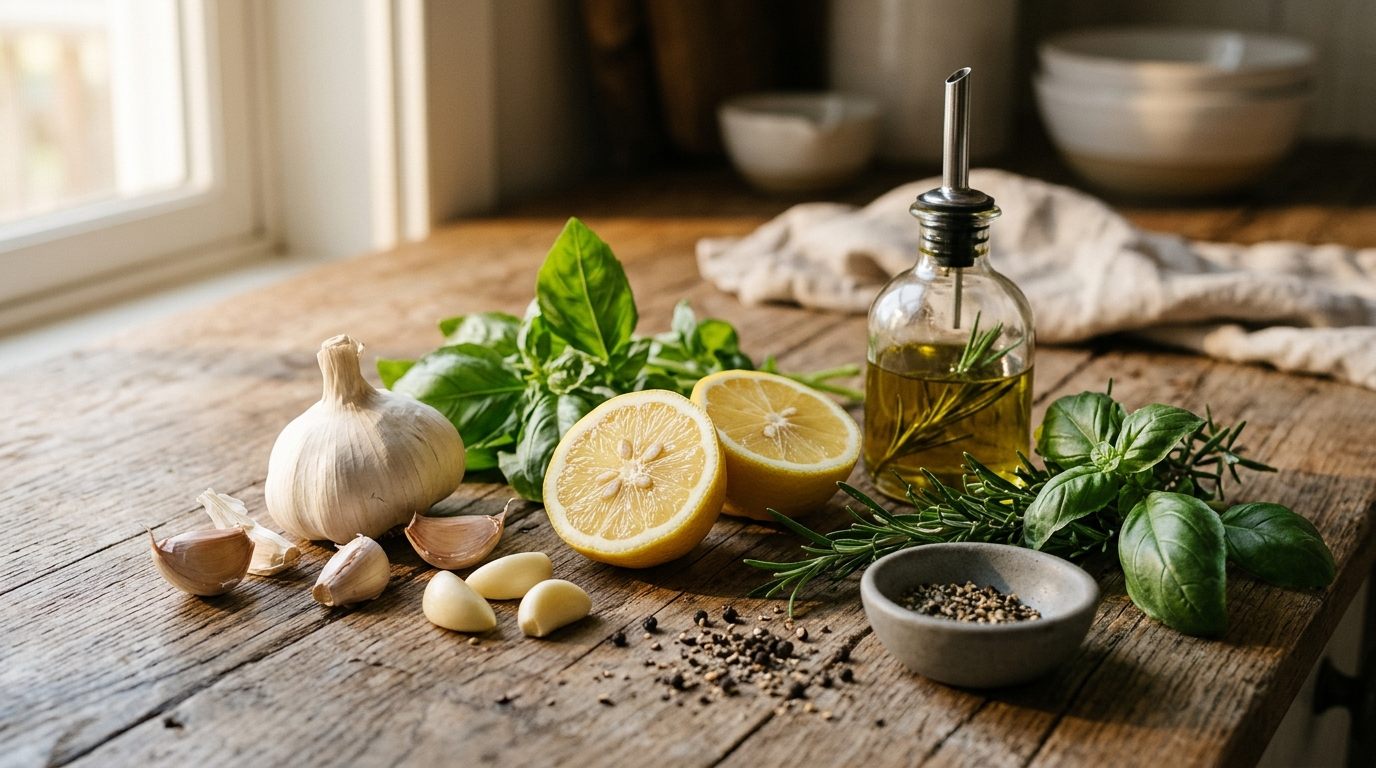
At a Glance
Unsalted food only tastes bland when you take the salt out of a recipe and put nothing back in its place. Replacing salt's chemical jobs with late-stage citrus/vinegar acid, Maillard skillet browning, natural mushroom/tomato umami, and fat-bloomed spices creates bold meals at under 25 mg of sodium.
- Fresh lemon/lime juice, red wine vinegar, or extra-virgin olive oil: 0 to 1 mg sodium per tbsp
- Natural umami builders: mushrooms (4 mg/cup), fresh tomato (6 mg), No-Salt tomato paste (9 mg/tbsp)
- Taste-bud recalibration window: 21–28 days to shift preferred salt thresholds down 30%–50%
Start here:Mix one jar of the All-Purpose Savory Herb Blend below tonight, and keep a bowl of fresh lemons and a bottle of apple cider vinegar right beside your stove.
Why taking salt out leaves a hole—and how flavor science fills it
When someone says "I tried cooking without salt and it tasted like cardboard," they usually took a classic recipe designed around a full teaspoon of salt (2,300 mg sodium), deleted the salt line, and changed nothing else.
In food science, sodium chloride is a shortcut that performs three distinct sensory jobs at once. Once you separate those three jobs, you can assign each one to a 0 to 10 mg culinary technique:
| What Salt Normally Does on the Tongue | The 0–10 mg Replacement Mechanism | Best Kitchen Ingredients (Sodium per Serving) |
|---|---|---|
| 1. Brightens top notes & wakes up saliva | Late-stage acid (triggers sour ion channels adjacent to ENaC salt receptors) | Fresh lemon/lime juice (0 mg), apple cider or red wine vinegar (0–1 mg/tbsp), balsamic vinegar (4 mg/tbsp) |
| 2. Deepens mid-palate savory fullness | Natural free glutamates & Maillard browning (activates T1R1/T1R3 umami receptors) | Browned mushrooms (4 mg/cup, FDC #169251), No-Salt tomato paste (9 mg/tbsp), caramelized onions (1 mg), roasted garlic (1 mg) |
| 3. Sharpens aroma & suppresses bitterness | Fat-bloomed volatile spices + piquant heat (trigeminal nerve warmth + fat-carried aromatics) | Extra-virgin olive oil (0 mg, FDC #171413), black pepper (1 mg/tsp), smoked paprika (2 mg/tsp), toasted cumin, fresh ginger |
The 28-day palate timeline: Why Week 1 is the hardest
During your first five days of cooking without salt, your tongue's epithelial sodium channels (ENaC) are still desensitized from years of 3,400 mg/day commercial food. Use the interactive timeline below to see what happens to your salt cravings and natural flavor sensitivity over the first four weeks:
The 28-Day Salt Palate & Blood Pressure Recalibration Curve
Sensory trials (Beauchamp & Bertino, Monell Chemical Senses Center) show preferred salt concentration in soup and bread drops by 30%–50%.
If you eat a fast-food fry or canned soup now, it tastes aggressively, almost unpleasantly salty rather than 'normal.'
5 core techniques that transform unsalted cooking
1. Sear hard for Maillard browning (never gray-boil proteins or vegetables)
Steamed plain chicken breast or boiled zucchini tastes watery without salt. Instead, pat proteins and vegetables bone-dry with a paper towel, coat with extra-virgin olive oil (0 mg), and sear undisturbed in a hot skillet or roast at 425°F (220°C) until deep golden-brown crusts form. The Maillard reaction between amino acids and natural sugars creates hundreds of savory pyrazine and furanone flavor compounds that carry a dish without any salt.
2. Bloom dried spices in warm olive oil for 30 seconds
Never dump garlic powder, cumin, curry powder, or oregano straight into watery broth. Heat 1 tablespoon of olive oil or unsalted butter (~2 mg) in your pan first, add your dried spices and minced garlic, and stir for 30 to 45 seconds until fragrant. Fat dissolves and carries the volatile essential oils across your palate.
3. Build an "Umami Base" with browned tomato paste and mushrooms
Before adding unsalted chicken or vegetable stock (72 mg/cup) to a soup, chili, or pasta skillet, stir 1 tablespoon of No-Salt-Added tomato paste (9 mg) and finely chopped mushrooms (4 mg/cup) into the sautéed onions and cook until the paste darkens from bright red to brick rust. You get a rich, meaty backbone for under 15 mg.
4. Add fresh acid off the heat right before serving
If you boil lemon juice or vinegar for 30 minutes, its bright volatile top notes evaporate. Stir 1 teaspoon of fresh lemon juice + a pinch of grated lemon zest into soups, beans, fish, or greens after turning off the burner.
5. Use temperature and crunch contrast
Salt-reduced meals benefit enormously from texture contrast. Top warm bowls of soup, pasta, or grain bowls with toasted unsalted pumpkin seeds (2 mg/oz), toasted slivered almonds (0 mg), thinly sliced raw radishes (2 mg), or crisp diced bell peppers (1 mg).
3 exact DIY salt-free seasoning blends (mix once, use all month)
Store-bought seasoning blends often sneak salt in as the first ingredient (even many "garlic herb" or "lemon pepper" jars pack 250–400 mg per quarter-teaspoon!). Mixing your own jars takes three minutes, costs a fraction of specialty bottles, and guarantees 0 to 2 mg of sodium per teaspoon:
| DIY Salt-Free Blend | Exact Recipe Formula (Makes ~½ Cup Jar) | Sodium per 1 tsp | Best Dishes to Use It On |
|---|---|---|---|
| 1. Everyday Savory Garlic-Herb (Replaces All-Purpose Seasoning) | 2 tbsp garlic powder (FDC #171329) · 1.5 tbsp onion powder · 1 tbsp dried oregano · 1 tbsp dried basil · 1 tbsp dried thyme · 2 tsp freshly ground black pepper (FDC #170931) · 1 tsp dry mustard powder · 1 tsp dried parsley | ~2 mg | Roasted chicken, turkey breast, scrambled eggs, unsalted soups, roasted potatoes, salad dressings |
| 2. Smoky Southwest & Fajita Rub (Replaces 420 mg Taco Packets) | 2 tbsp smoked Spanish paprika · 1.5 tbsp ground toasted cumin · 1 tbsp garlic powder · 1 tbsp onion powder · 2 tsp chili powder (verify 'pure ground chilies', not salted chili blend!) · 1.5 tsp Mexican oregano · ½ tsp cayenne pepper | ~3 mg | Steak/chicken/shrimp fajitas, black beans, corn tortilla tacos, roasted sweet potatoes, chili |
| 3. Bright Mediterranean Citrus-Pepper (Replaces Salted Lemon-Pepper) | 2 tbsp dried grated lemon peel (verify no added salt) · 1.5 tbsp coarsely cracked black pepper · 1 tbsp garlic powder · 1 tbsp crushed dried rosemary · 2 tsp dried dill weed · 1 tsp ground coriander | ~1 mg | Pan-seared salmon, cod, shrimp, steamed asparagus, broccoli, Greek yogurt dips |
Important spice-jar warning: When buying chili powder, curry powder, or lemon-pepper to make your blends, always read the fine print on the back of the spice tin. Pure ground ancho/cayenne chile pepper has ~2 mg of sodium, whereas some commercial "Chili Powder" blends add table salt as a filler.
See also: Better-Tasting Soup Without Salt: What a Controlled Taste Study Found and MSG vs. Table Salt: Does MSG Actually Have Less Sodium?.
References
- USDA FoodData Central SR Legacy: Raw lemon juice (FDC #169231), garlic powder (FDC #171329), black pepper (FDC #170931), white mushrooms (FDC #169251), fresh tomato (FDC #170457), olive oil (FDC #171413).
- Institute of Medicine (US) Committee on Strategies to Reduce Sodium Intake. Henney JE, Taylor CL, Boon CS, eds. Strategies to Reduce Sodium Intake in the United States: Chapter 3, Taste and Flavor. Washington (DC): National Academies Press; 2010.
Common Questions
- What is the single fastest fix when a cooked low-sodium dish tastes flat?
- Acid—added at the very end off the heat. Stirring 1 teaspoon of fresh lemon juice, lime juice, apple cider vinegar, or sherry vinegar into a bowl of unsalted soup, beans, or roasted vegetables stimulates sour taste receptors right beside your salt channels and immediately lifts the entire dish for 0 to 1 mg of sodium.
- Why do dried herbs and spices need to be 'bloomed' in warm olive oil?
- Most flavor molecules in dried spices (like cumin, smoked paprika, curry powder, oregano, and thyme) are fat-soluble rather than water-soluble. Warming them in 1 tablespoon of extra-virgin olive oil for 30 to 45 seconds before adding liquid releases 3 to 4 times more aroma than dumping dry spices into boiling water.
- Which whole foods deliver natural savory umami without added salt?
- Sautéed white or cremini mushrooms (4 mg/cup, FDC #169251), dried shiitake mushrooms, ripe tomatoes (6 mg, FDC #170457), No-Salt-Added tomato paste (9 mg/tbsp), caramelized onions (1 mg), roasted garlic (1 mg/clove), and nutritional yeast (5–10 mg/tbsp) are packed with natural free glutamates and guanylates.
- How long does it take before low-sodium cooking tastes normal to my family?
- Roughly 21 to 28 days. Taste receptor cells regenerate every 10–14 days, and clinical sensory trials show that after 3 weeks of eating under 2,000 mg/day, your tongue's salt detection threshold drops so natural vegetable and herb flavors come forward clearly.