Life Low in Sodium · 7 min read · Updated 2026-11-27
Living Without Salt: Vilhjalmur Stefansson's 1935 Arctic Account (& Modern Palate Science)
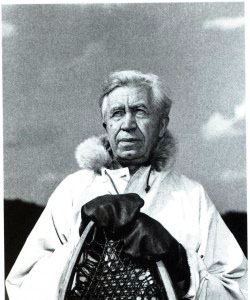
At a Glance
Arctic anthropologist Vilhjalmur Stefansson proved in 1935 that our belief that 'food is unpalatable without salt' is a learned habit—much like tobacco—and that within weeks of eating unsalted food, even a prized gift of salt goes forgotten.
- Published in Harper's Monthly Magazine (November 1935) based on his 1906 Mackenzie Delta expedition
- Modern clinical confirmation (Monell Chemical Senses Center): taste buds reset in 21–28 days
- Natural unsalted fish & meat supply ~500–800 mg/day of intrinsic sodium—covering human physiological needs
Start here:When Week 1 of a low-sodium diet feels flat, read Stefansson's account below and give your taste buds a full 21 days to recalibrate before judging unsalted food.
Why salt craving is a learned habit, not a biological sentence
Anyone who cuts their sodium from 3,400 mg/day down to 1,500 mg/day goes through a frustrating first week where soup, eggs, and chicken taste strangely hollow. During those first five days, it is easy to convince yourself that human beings are hard-wired to crave heavily salted food forever.
History and anthropology prove otherwise. Vilhjalmur Stefansson (1879–1962), the renowned American-Canadian anthropologist of Icelandic descent, left one of the clearest firsthand accounts in nutritional literature of what happens when a salt-loving Westerner is suddenly forced to live with zero added salt among the Inuit of the Mackenzie River Delta in 1906.
At first, Stefansson was so desperate for salt that he tried boiling down Arctic seawater to make his own (which came out bitter with magnesium salts). Yet within weeks, his palate recalibrated completely—and the climax of his story, when a dog-team visitor gifts him a treasured half-can of real salt, is a lesson every low-sodium cook should read.
Stefansson's November 1935 Harper's Monthly Account
The Mackenzie Eskimos, Roxy told me, believe that what is good for grown people is good for children and enjoyed by them as soon as they get used to it. Accordingly they teach the use of tobacco when a child is very young. It then grows to maturity with the idea that you can't get along without tobacco. But, said Roxy, the whalers have told that many whites get along without it, and he had himself seen white men who never use it, while the few white women, wives of captains, none used tobacco. (This, remember, was in 1906.)
Now Roxy had heard that white people believe that salt is good for, and even necessary for children, so they begin early to add salt to the child's food. That child then would grow up with the same attitude toward salt as an Eskimo has toward tobacco. However, said Roxy, since we Eskimos were mistaken in thinking tobacco so necessary, may it be that the white men are mistaken about salt? Pursuing the argument, he concluded that the reason why all Eskimos dislike salted food and all white men like it was not racial but due to custom. You could then break the salt habit as easily as the tobacco habit and you would suffer no ill result beyond the mental discomfort of the first few days or weeks.
Roxy did not know, but I did as an anthropologist, that in pre-Columbian times salt was unknown or the taste of it disliked and the use of it avoided through much of North and South America. It may possibly be true that the carnivorous Eskimos, in whose language the word salty, mamaitok, is synonymous with evil-tasting, disliked salt more intensely than those Indians who were partly herbivorous. Nevertheless, it is clear that the salt habit spread more slowly through the New World from the Europeans than the tobacco habit through Europe from the Indians. Even today there are considerable areas, for instance in the Amazon basin, where the natives still abhor salt. Not believing that the races differ in their basic natures, I felt inclined to agree with Roxy that the practice of salting food is with us a social inheritance and the belief in its merits a part of our folklore.
Through this philosophizing I was somewhat reconciled to going without salt, but I was nevertheless overjoyed when one day Ovayuak, my new host in the eastern delta, came indoors to say that a dog team was approaching which he believed to be that of Ilavinirk, a man who had worked with whalers and who possessed a can of salt. Sure enough, it was Ilavinirk, and he was delighted to give me the salt, a half-pound baking-powder can about half full, which he said he had been carrying around for two or three years, hoping sometime to meet someone who would like it for a present. He seemed almost as pleased to find that I wanted the salt as I was to get it. I sprinkled some on my boiled fish, enjoyed it tremendously, and wrote in my diary that it was the best meal I had had all winter. Then I put the can under my pillow, in the Eskimo way of keeping small and treasured things. But at the next meal I had almost finished eating before I remembered the salt. Apparently then my longing for it had been what you might call imaginary. I finished without salt, tried it at one or two meals during the next few days and thereafter left it untouched. When we moved camp the salt remained behind.
— Vilhjalmur Stefansson, Harper's Monthly Magazine, November 1935
The 28-Day Taste-Bud Recalibration Curve: What Modern Sensory Science Found
Half a century after Stefansson left his baking-powder tin of salt behind at camp, sensory scientists Gary Beauchamp, Mary Bertino, and Karl Engelman at the Monell Chemical Senses Center tested Stefansson's observation in controlled clinical trials (American Journal of Clinical Nutrition, 1982).
Click through the 4 phases of the 28-day taste reset curve below to see how your tongue's epithelial sodium channels (ENaC) and blood pressure adapt from Day 1 to Week 4:
The 28-Day Salt Palate & Blood Pressure Recalibration Curve
Sensory trials (Beauchamp & Bertino, Monell Chemical Senses Center) show preferred salt concentration in soup and bread drops by 30%–50%.
If you eat a fast-food fry or canned soup now, it tastes aggressively, almost unpleasantly salty rather than 'normal.'
Why the "Can Under the Pillow" Moment Happens Around Week 3
Look at the exact sequence Stefansson experienced—and compare it with what modern patients on a 1,500 mg diet report every day:
| Adaptation Stage | Stefansson's 1906 Arctic Experience | Modern Sensory & Renal Physiology | Practical Kitchen Strategy |
|---|---|---|---|
| Stage 1: Days 1–7 (Acute Craving) | Desperately missed salt; boiled seawater trying to extract crystals | Tongue ENaC salt receptors are down-regulated from chronic 3,400 mg exposure; kidneys ramp up aldosterone to conserve Na | Use heavy lemon juice, vinegars, garlic, black pepper, and doubled herbs so meals have sharp sensory contrast |
| Stage 2: Days 8–14 (Cell Turnover) | Philosophical reconciliation; boiled fish and caribou began tasting normal | Taste receptor cells on the tongue turn over every 10 to 14 days; new receptor cells express higher sensitivity to low sodium | Keep processed/restaurant salt bombs out of your week so you don't reset the receptor threshold upward |
| Stage 3: Weeks 3–4 (The Forgotten Tin) | Sprinkled gifted salt on one meal out of nostalgia, then forgot it under his pillow at the very next meal | Bertino et al. (1982): Preferred salt concentration in soup and crackers drops by 30% to 50% ("hedonic shift") | Natural sweetness of carrots, tomatoes, onions, and fresh fish now stands out vividly without salt |
| Stage 4: Month 2+ (Reverse Shock) | Left the can of salt behind when breaking camp; salted food later tasted harsh | Heavily salted restaurant soups or canned foods now trigger aversive, bitter-salty taste fibers (like the Inuit mamaitok) | Your low-sodium diet becomes self-sustaining because commercial food tastes overly briny |
What Stefansson's Amazon Basin Note Foreshadowed: The INTERSALT Yanomami Discovery
Notice one passing sentence in Stefansson's third paragraph: "Even today there are considerable areas, for instance in the Amazon basin, where the natives still abhor salt."
Fifty-three years after Stefansson wrote that sentence in 1935, the landmark INTERSALT Cooperative Research Group study (BMJ, 1988; 10,079 adults across 52 populations worldwide) measured 24-hour urinary sodium and blood pressure among the Yanomami Indians of the Amazon basin—who lived on an unacculturated diet of plantains, root vegetables, fruit, game, and fish with virtually zero added sodium chloride:
- Average Yanomami blood pressure: 96 / 61 mmHg
- Age-related blood pressure rise from age 20 to age 60: 0.0 mmHg (blood pressure did not climb with age at all, and hypertension was virtually nonexistent!)
You don't need to move to the Arctic or the Amazon to benefit from Stefansson's discovery. Just give your taste buds 21 to 28 uninterrupted days below 1,800–2,000 mg/day, use our Cooking Without Salt Flavor Guide, and watch how quickly the table salt shaker becomes something you forget to reach for.
References
- Stefansson V. Adventures in Diet (Part I). Harper's Monthly Magazine. November 1935;171:668–675.
- Bertino M, Beauchamp GK, Engelman K. Long-term reduction in dietary sodium alters the taste of salt. American Journal of Clinical Nutrition. 1982;36(6):1134–1144.
- Intersalt Cooperative Research Group. Intersalt: an international study of electrolyte excretion and blood pressure. Results for 24 hour urinary sodium and potassium excretion. BMJ. 1988;297(6644):319–328.
Common Questions
- Who was Vilhjalmur Stefansson and why is his 1935 salt account famous in nutrition science?
- Vilhjalmur Stefansson (1879–1962) was a Harvard-trained anthropologist and Arctic explorer who lived for more than five cumulative years with the Inuit of the Canadian Arctic starting in 1906. His November 1935 Harper's Monthly series ('Adventures in Diet') and subsequent controlled metabolism ward experiments at Bellevue Hospital (published in JAMA, 1930) provided early clinical proof that craving added table salt is a cultural habit rather than a biological urge—and that breaking the habit takes only a few weeks of mental adjustment.
- How did traditional Inuit survive with zero added table salt?
- As discussed in our guide on the ~500 mg daily biological floor, fresh animal muscle, fish, and organs naturally contain 50 to 90 mg of intrinsic intracellular sodium per 3-ounce serving—easily providing 500 to 800 mg of natural sodium per day without adding a single crystal of sodium chloride.
- How long did it take Stefansson to lose his craving for salt—and does modern research agree?
- Stefansson noted that the acute mental discomfort of missing salt faded after 'the first few days or weeks.' Decades later, controlled sensory studies at the Monell Chemical Senses Center (Bertino, Beauchamp & Engelman, American Journal of Clinical Nutrition, 1982) confirmed that when adults follow a low-sodium diet, their preferred salt concentration in food drops significantly within 3 to 4 weeks (21–28 days).
- What does the Inuit word 'mamaitok' mean in Stefansson's account?
- In Stefansson's 1906 Mackenzie Delta notes, the Inuit word for salty ('mamaitok') was synonymous with 'bad-tasting' or 'evil-tasting'—because to a palate raised entirely on unsalted fresh fish and caribou, salted European food tasted unpleasantly bitter and burning.