Life Low in Sodium · 5 min read · Updated 2026-11-27
Eating Out on a Low-Sodium Diet: The Complete Restaurant & Cuisine Survival Guide
At a Glance
You do not have to give up restaurants, anniversaries, or business dinners to keep your sodium under 1,500–2,000 mg/day—you just have to avoid pre-made sauces, brined poultry, and soup bases, and order proteins cooked to order.
- Typical casual-dining pasta, burger, or stir-fry entrée: 1,600–3,100 mg sodium
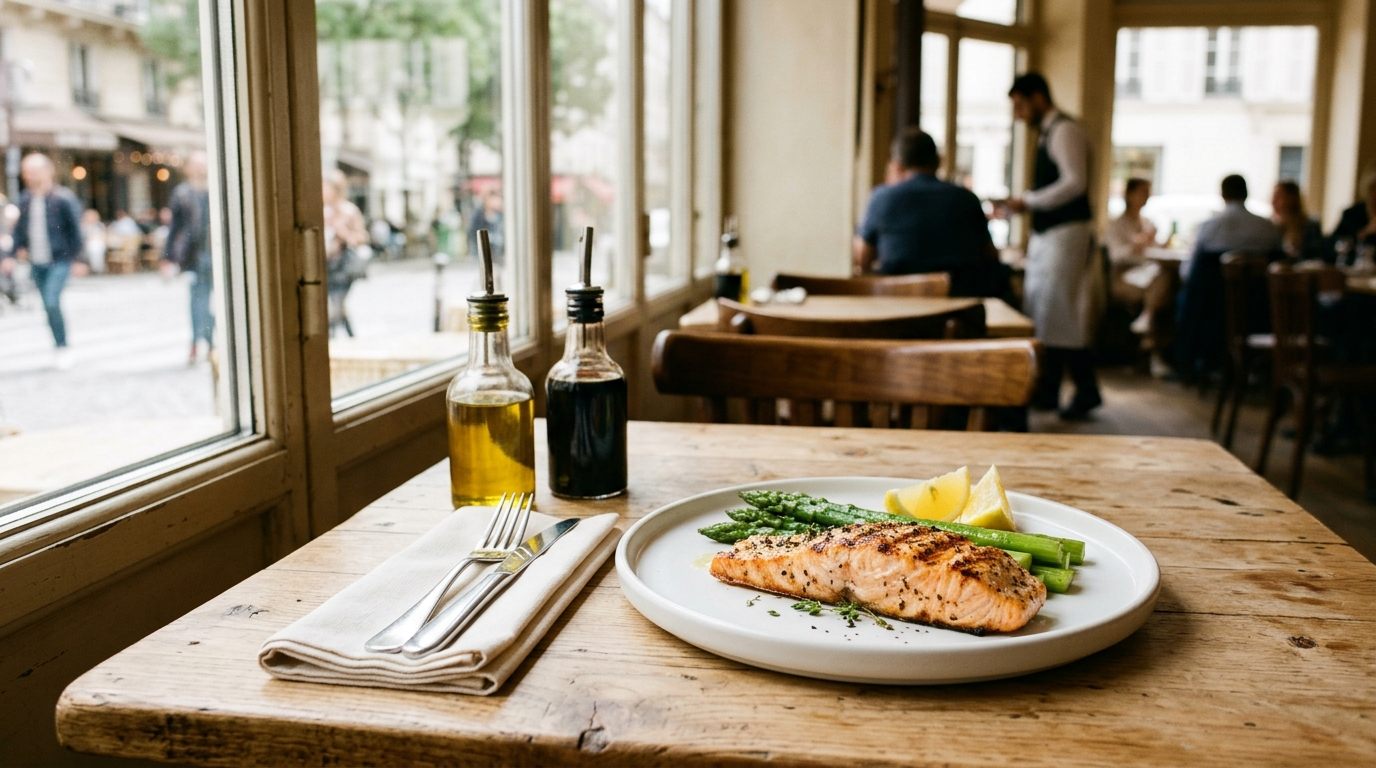
- Plain grilled salmon (6 oz) + baked potato + steamed broccoli + lemon: ~145–190 mg
- Ordering dressing/sauce on the side & using the fork-dip method saves 450–800 mg
Start here:Use the 20-second server script below before the kitchen fires your plate, and keep a small travel herb shaker in your coat or bag.
Why a single restaurant dinner can wipe out two days of careful eating
According to USDA and CDC dietary surveillance data, over 70% of the sodium Americans consume comes from packaged and restaurant food—and sit-down restaurant meals are actually denser in sodium per calorie than fast food. When a home cook seasons a dinner plate, a pinch of salt adds 150 to 250 mg. In a commercial kitchen, every station salts its own component independently: the prep cook brines the protein, the sauté cook salts the vegetables, the sauce station reduces salted stock by half, and the expeditor finishes the plate with flaky sea salt.
The interactive chart below shows where the biggest hidden sodium spikes hide across everyday dining categories—and how much a single smart swap cuts immediately:
Hover any aisle to compare the usual grocery trap against the low-sodium pick:
The 4 hidden kitchen stages where restaurant sodium multiplies
Understanding how a commercial line operates makes ordering much easier. A line cook cannot take salt out of a batch-prepped item, so your goal is to pick items that are cooked raw-to-order on the grill or sauté station:
- Batch Prep (Uncorrectable at service time): Soups, chilis, marinara sauces, braised short ribs, pulled pork, curry bases, and pre-marinated chicken breasts are salted hours or days before you walk in. Never expect a kitchen to make a "low-sodium bowl of soup."
- The Searing / Grill Line (100% controllable): Steaks, chops, burgers, fresh fish fillets, and plain eggs are seasoned seconds before hitting the heat. Asking for "no salt or house grill seasoning" stops 400 to 800 mg right here.
- The Pan Finish (100% controllable): Restaurants mount sauces and coat steamed vegetables with ladlefuls of salted butter or seasoned oil. Ask for "steamed dry or sautéed in plain olive oil only."
- The Garnish & Sauce Pass (100% controllable): Request "all sauces, dressings, and gravies in a cup on the side" and ask for "extra fresh lemon or lime wedges."
The 20-second server script (polite, clear, and kitchen-friendly)
Line cooks respect clear, specific instructions that don't slow down the rail. You do not need to give a long medical lecture—just say:
"I'm on a strict medical low-sodium restriction. Could the kitchen please grill the salmon [or steak] completely plain—no salt, no house seasoning blend, and no salted butter—with the sauce on the side and extra lemon wedges? And could the vegetables be steamed plain with no butter or salt?"
Pair that order with a pocket Travel Spice Shaker filled with garlic powder, cracked black pepper, and salt-free herbs at the table, and your plate will taste bright and well-seasoned at under 250 mg.
Cuisine-by-cuisine survival table: What to order vs. what to skip
Whether you are going out for Mexican, Italian, Japanese, Steakhouse, or American diner breakfast, every menu has safe raw-to-order dishes alongside 2,500 mg traps:
| Cuisine | High-Sodium Menu Trap (Typical Sodium) | Smart Low-Sodium Order (Est. Sodium) | Specific Modification to Request |
|---|---|---|---|
| Steakhouse / American | French onion soup + seasoned ribeye w/ loaded baked potato (2,400–3,200 mg) | 6 oz Filet or Strip Steak (no grill salt) + Plain Baked Potato + Steamed Asparagus (~180–260 mg) | "No salt/steak rub on the grill; plain potato with olive oil & chives; lemon wedges." |
| Italian Trattoria | Chicken Parmigiana or Lasagna Bolognese w/ garlic bread (2,200–2,900 mg) | Grilled Branzino or Chicken Paillard w/ olive oil, garlic, herbs & roasted veggies (~220–380 mg); or Pasta Primavera in garlic & olive oil (aglio e olio, no pasta-water salt) | "Sautéed in olive oil and fresh garlic with no added salt and no salted pasta water." |
| Mexican / Tex-Mex | Flour tortilla burrito w/ queso, refried beans, chips & salsa (2,300–3,100 mg) | Fajitas (steak or shrimp, cooked with no seasoning salt) + Soft Corn Tortillas (11 mg each) + Fresh Pico de Gallo & Avocado (~280–420 mg) | "Cook fajita meat & peppers with no fajita salt blend; corn tortillas instead of flour." |
| Japanese / Sushi | Miso soup (850 mg) + Ramen bowl (2,200 mg) + Tempura w/ soy sauce (3,000+ mg) | Sashimi or Nigiri (fresh salmon/tuna, ~60–110 mg) + Plain Steamed Rice (2 mg) + Unsalted Edamame + Fresh Ginger & Wasabi (~140–240 mg) | "Unsalted edamame; skip soy sauce or touch fish lightly with a single drop + lemon." |
| Chinese / Thai Stir-Fry | Kung Pao / General Tso's / Pad Thai w/ brown or fish sauce (1,900–2,800 mg) | Steamed Fish or Shrimp & Mixed Vegetables w/ fresh ginger, garlic, and scallions over plain steamed white/brown rice (~180–310 mg) | "Steamed with no soy sauce, oyster sauce, or MSG—sauce on the side." |
| Breakfast Diner | Bacon, sausage, buttermilk pancakes & home fries (1,800–2,400 mg) | 2 Poached or Scrambled Eggs (124 mg, cooked in unsalted oil) + Fresh Fruit Bowl (5 mg) + Plain Oatmeal (1 mg) (~135–190 mg) | "Cook eggs with no salt on the flat-top and no salted butter; dry toast or fruit cup." |
How to handle bread baskets, salads, and drinks at the table
- Skip the complimentary bread basket (or swap to olive oil): Two slices of restaurant sourdough or artisan bread pack 320 to 480 mg before you add salted butter (91 mg/tbsp). If you eat one small piece, dip it in extra-virgin olive oil (0 mg) with cracked black pepper and a splash of balsamic vinegar (4 mg/tbsp).
- Build a custom salad dressing right at the table: Commercial house vinaigrettes and creamy ranch or Caesar dressings carry 280 to 520 mg per 2-tablespoon ladle—plus croutons (180 mg) and feta/olives (350+ mg). Ask for cruets of olive oil and red wine vinegar (or fresh lemon wedges) alongside a garden salad with no cheese or croutons.Total sodium: under 35 mg.
- Watch cocktail rims and bar mixers: A 12 oz regular beer (14 mg), a glass of red or white wine (~10 mg), or a spirit with soda water and lime (~10 mg) adds almost no sodium. By contrast, a single Bloody Mary or Michelada packs 1,100 to 1,400 mg.
See also our companion guide for highway travel: Low-Sodium Fast Food: Exact Orders That Won't Wreck Your Day.
References
- Centers for Disease Control and Prevention (CDC). About Sodium and Health: Where Most Dietary Sodium Comes From.
- USDA FoodData Central SR Legacy: Cooked Atlantic salmon (FDC #175167), plain baked potato (FDC #170026), raw/steamed broccoli (FDC #170379), soy sauce (FDC #174277).
- U.S. Food and Drug Administration (FDA). Menu Labeling Requirements (21 CFR 101.11).
Common Questions
- Why does restaurant food have 3 to 5 times more sodium than home cooking?
- Commercial kitchens layer sodium at four separate stages: (1) brining or marinating raw chicken and pork before service, (2) seasoning proteins with kosher salt + house spice blends on the grill line, (3) deglazing pans with salted stock and finishing with salted butter, and (4) garnishing with capers, parmesan, bacon, or soy reductions.
- What is the safest entrée to order at a sit-down restaurant?
- Fresh fish (like salmon, halibut, or cod, ~50–70 mg per 3 oz) or a plain steak cut cooked to order with no grill seasoning, paired with a plain baked potato (~10–40 mg) and steamed broccoli or asparagus (~15–30 mg) with lemon wedges and olive oil on the side.
- Why is restaurant chicken harder to order low-sodium than steak or fish?
- Many casual and chain restaurants receive pre-marinated or tumbled chicken breasts already injected with a salt-and-phosphate brine. Even if the line cook skips salt on the grill, a pre-brined chicken breast still carries 450 to 750 mg. Always ask whether the chicken is marinated in advance; if so, order fresh fish or steak instead.
- How should I use sauces when ordered 'on the side'?
- Use the fork-tine dip method: dip just the tips of your fork into the side cup of dressing or sauce before spearing each bite. You get the full aroma and taste directly on your tongue while consuming less than 1 teaspoon (~80–120 mg) instead of 3 tablespoons (450–750 mg).