Life Low in Sodium · 5 min read · Updated 2026-11-27
Low-Sodium Fruits and Vegetables: Complete Produce & Potassium Reference Guide
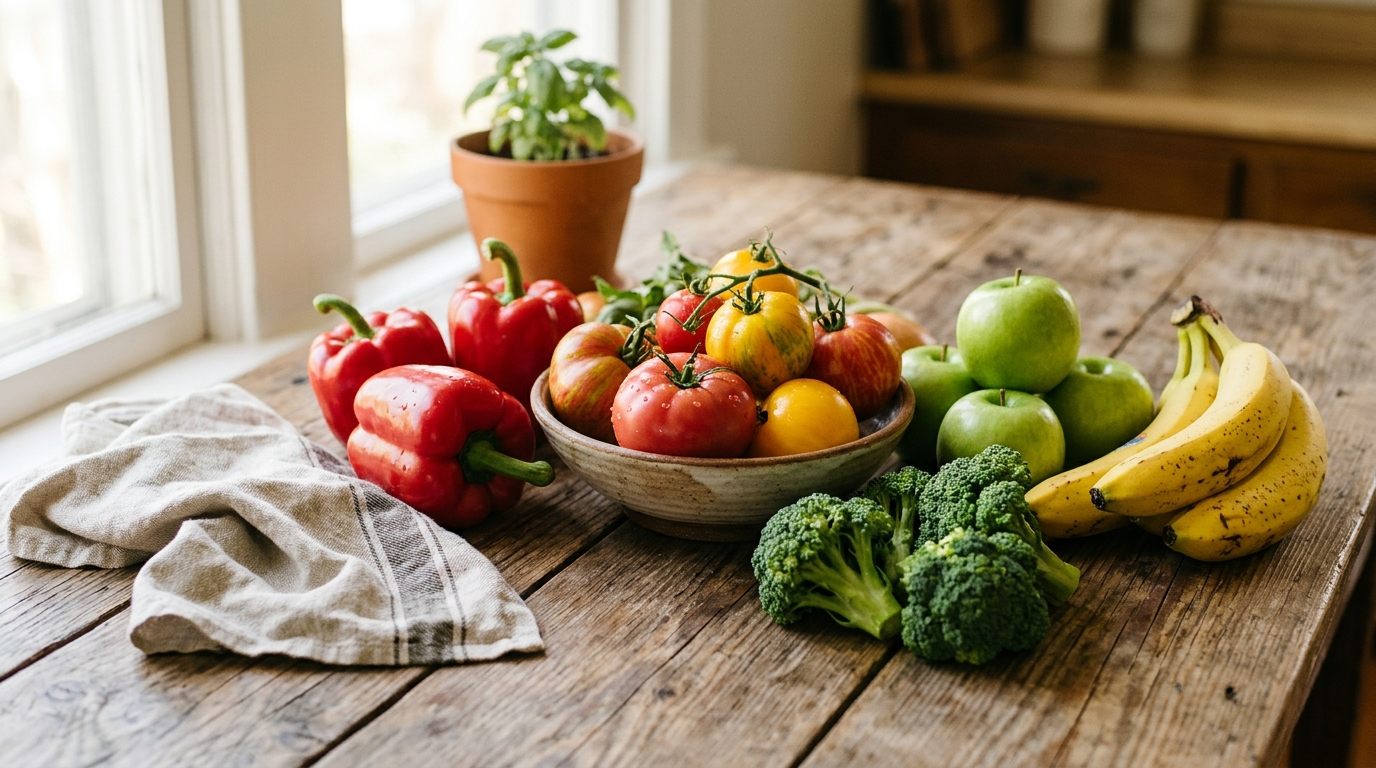
At a Glance
Fresh and plain frozen fruits (0–5 mg) and vegetables (1–35 mg) are the cornerstone of a blood-pressure-friendly kitchen because they do double duty: they keep meal sodium near zero while delivering 200 to 926 mg of potassium per serving.
- Baked potato w/ skin (FDC #170026): 10 mg sodium · 926 mg potassium (92:1 K:Na ratio)
- Half Hass avocado (FDC #171705): 5 mg sodium · 485 mg potassium · Banana (FDC #173944): 1 mg Na · 422 mg K
- Fresh/Plain Frozen vs. Regular Canned Veggies: 1–30 mg vs. 350–506 mg per half-cup
Start here:Build every lunch and dinner plate around half a plate of fresh, plain frozen, or No-Salt-Added canned produce—and check our complete Fruit and Vegetable tables below.
Why fresh produce does double duty for blood pressure (The Potassium-to-Sodium Ratio)
On a low-sodium diet, fruits and vegetables are not just "safe filler foods" that happen to lack salt. They are active physiological allies.
In cardiovascular medicine, your dietary potassium-to-sodium ratio is just as important as your raw sodium count. When you eat potassium-rich whole produce—like a baked potato (926 mg K / 10 mg Na), half an avocado (485 mg K / 5 mg Na), a banana (422 mg K / 1 mg Na), or a medium tomato (292 mg K / 6 mg Na)—that potassium signals your kidneys to excrete excess sodium through urine (potassium-induced natriuresis) and relaxes the smooth muscle walls of your arteries.
(Medical reminder: If you have moderate-to-advanced Chronic Kidney Disease [CKD] or take potassium-sparing medications, ask your nephrologist for your personal daily potassium target—see How Low Is Too Low for Sodium & CKD Nuances.)
Top 16 Fruits & Vegetables Ranked by Potassium-to-Sodium Power
Every row below is verified against USDA FoodData Central SR Legacy laboratory analysis:
| Produce Item (Raw or Cooked Unsalted) | Standard Serving | Sodium (mg) | Potassium (mg) | K : Na Ratio | FDA Sodium Claim |
|---|---|---|---|---|---|
| 1. Banana, raw (FDC #173944) | 1 medium (118 g) | 1 mg | 422 mg | 422 : 1 | Sodium-Free |
| 2. Navel Orange, raw (FDC #169097) | 1 medium (131 g) | 0 mg | 237 mg | 237+ : 1 | Sodium-Free |
| 3. Peach or Nectarine, raw | 1 medium (150 g) | 0 mg | 285 mg | 285+ : 1 | Sodium-Free |
| 4. Green Beans, fresh or plain frozen | 1 cup (100 g) | 1 mg | 211 mg | 211 : 1 | Sodium-Free |
| 5. Zucchini / Summer Squash, sliced | 1 cup (113 g) | 2 mg | 295 mg | 148 : 1 | Sodium-Free |
| 6. Strawberries, raw halves | 1 cup (152 g) | 2 mg | 233 mg | 116 : 1 | Sodium-Free |
| 7. Apple, raw with skin (FDC #171688) | 1 medium (182 g) | 2 mg | 195 mg | 98 : 1 | Sodium-Free |
| 8. Hass Avocado, raw (FDC #171705) | ½ medium (100 g) | 5 mg | 485 mg | 97 : 1 | Very Low Sodium |
| 9. Baked Potato w/ Skin, unsalted (FDC #170026) | 1 medium (173 g) | 10 mg | 926 mg | 93 : 1 | Very Low Sodium |
| 10. Sweet Bell Pepper, chopped | 1 cup (149 g) | 3–4 mg | 314 mg | 89 : 1 | Sodium-Free |
| 11. White or Cremini Mushrooms (FDC #169251) | 1 cup (70 g) | 4 mg | 223 mg | 56 : 1 | Sodium-Free |
| 12. Ripe Red Tomato (FDC #170457) | 1 medium (123 g) | 6 mg | 292 mg | 49 : 1 | Very Low Sodium |
| 13. Sweet Potato, baked unsalted (FDC #168482) | 1 medium (114 g) | 41 mg | 542 mg | 13 : 1 | Low Sodium |
| 14. Broccoli, raw or steamed (FDC #170379) | 1 cup (91 g) | 30 mg | 288 mg | 10 : 1 | Very Low Sodium |
| 15. Red Beets, boiled unsalted (FDC #169145) | ½ cup (85 g) | 65 mg | 259 mg | 4 : 1 | Low Sodium |
| 16. Celery, raw stalk (FDC #169988) | 1 medium stalk (40 g) | 32 mg | 104 mg | 3.3 : 1 | Very Low Sodium |
Fresh vs. Frozen vs. Canned Produce: Where the 400+ mg traps hide
See how processing transforms low-sodium produce into high-sodium pantry traps on the interactive chart below (click the "Tomatoes (6 → 615 mg)" tab):
How STPP Brine & Canning Multiply Shrimp Sodium 8.4×
Soaked in salt + sodium tripolyphosphate during factory freezing to retain thaw weight and glossy texture.
Aisle rule: Always flip frozen shrimp bags over to the ingredient line: if it lists 'sodium tripolyphosphate' (STPP) or 'salt', a 3 oz serving jumps from 101 mg to 481+ mg.
When you shop outside the fresh produce bins, follow this side-by-side aisle guide:
| Produce Format | Typical Sodium per Serving | Verdict & Smart Shopping Rule |
|---|---|---|
| 1. Fresh Raw Fruits & Vegetables | 0 to 35 mg (65–150 mg in beets/chard) | Best Choice. Zero labels required; highest potassium-to-sodium ratio. |
| 2. Plain Flash-Frozen Fruits & Vegetables | 1 to 25 mg | Equally Great. Verify the ingredient line lists only the produce item. |
| 3. "No Salt Added" Canned Tomatoes, Beans & Corn | 10 to 20 mg per ½ cup | Pantry Staple. Cuts 95%–97% of canning salt compared to regular cans. |
| 4. Regular Salted Canned Vegetables (Drained & Rinsed 60 sec) | ~180 to 260 mg per ½ cup | Emergency Backup. Rinsing under tap water for 60 seconds removes ~36%–41% of brine. |
| 5. Frozen Vegetables in Butter, Garlic-Herb, or Cheese Sauce | 340 to 520 mg per cup | Skip. Buy plain frozen vegetables and toss with your own olive oil, garlic & lemon (0 mg). |
| 6. Regular Unrinsed Canned Vegetables & Tomato Sauce | 350 to 506 mg per ½ cup | Skip. Up to 84× more sodium than the fresh vegetable. |
| 7. Brined Pickles, Olives, Sauerkraut & Jarred Peppers | 300 to 800+ mg per serving | High-Brine Trap. Use fresh cucumbers, fresh jalapeños, and vinegar instead. |
For dedicated deep-dives into each side of the produce department, read our two companion references:
- What Fruits Are Low in Sodium? (Complete 22-Fruit Reference)
- Low-Sodium Vegetables: Complete 25-Item Fresh Produce List
- Sodium in Tomatoes: Fresh (6 mg) vs. Canned Sauce (506 mg)
References
- USDA FoodData Central SR Legacy: Bananas (FDC #173944), Apples (FDC #171688), Broccoli (FDC #170379), Celery (FDC #169988), Beets (FDC #169145), Baked potato (FDC #170026), Tomatoes (FDC #170457), Avocado (FDC #171705).
- Sacks FM, Svetkey LP, Vollmer WM, et al. Effects on blood pressure of reduced dietary sodium and the Dietary Approaches to Stop Hypertension (DASH) diet. New England Journal of Medicine. 2001;344(1):3–10.
Common Questions
- Why do cardiologists emphasize eating high-potassium fruits and vegetables alongside a low-sodium diet?
- Sodium and potassium work like a biological seesaw inside your kidneys and blood vessel walls. High dietary potassium activates the renal sodium-chloride cotransporter (NCC) switch that tells your kidneys to flush extra sodium out in urine, while relaxing vascular smooth muscle. In the landmark 2001 NEJM DASH-Sodium trial, combining a produce-rich diet (~4,700 mg potassium/day) with low sodium (1,500 mg/day) produced the largest blood pressure drop (-11.5 mmHg systolic in hypertensive adults).
- Is frozen produce just as good as fresh produce for a low-sodium diet?
- Yes—provided the ingredient list contains only the fruit or vegetable! Plain frozen broccoli, peas, corn, spinach, berries, and mango chunks are flash-frozen at peak ripeness with 0 to 25 mg of natural sodium and retain 100% of their potassium. Just skip frozen pouches packed in 'butter sauce' or 'seasoned herb sauce' (350–520 mg).
- Which vegetables have the highest natural sodium, and are they still healthy?
- Swiss chard (~150 mg per half-cup cooked), cooked beets (65 mg per half-cup, FDC #169145), cooked spinach (63 mg per half-cup), carrots (42–88 mg/cup), and celery (32 mg/stalk, FDC #169988) absorb more natural sodium from soil than tree fruits or peppers. Even so, they pack 4 to 8 times more potassium than sodium and remain heart-healthy whole foods when cooked without added salt.
- How much sodium do I save by switching from regular canned vegetables to 'No Salt Added' cans?
- You save roughly 330 to 490 mg of sodium per half-cup serving (a 95% to 97% reduction). Regular canned green beans, corn, peas, and diced tomatoes carry 320 to 506 mg per half-cup, whereas 'No Salt Added' cans contain just 10 to 20 mg.